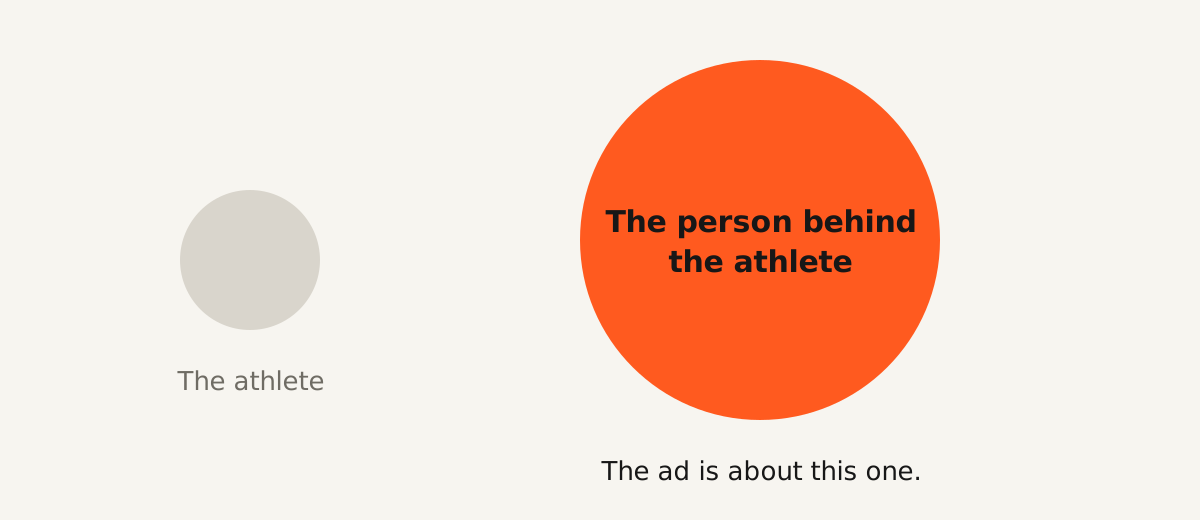
Procter & Gamble’s Olympics ads are emotionally engaging because the product is almost absent from them. The films are about the parent behind the athlete, and the detergent appears for a few seconds at the end. Small brands that try to borrow the effect usually copy the wrong part: the Games themselves in place of the idea.
One idea, kept for years
P&G first ran “Thank You, Mom” at the Vancouver Winter Games and brought it back for London 2012 (MediaPost, 2012). The International Olympic Committee called the London campaign the largest marketing programme in the company’s history and the first milestone of a ten-year partnership (IOC, 2012).
The idea did not change from one Games to the next. The camera stays on a mother through years of early practices, and the medal ceremony is the last minute of her story.
What a small brand can copy
Thank the person behind your customer. A renovation company’s customer is the family that lived without a kitchen for six weeks. A plant’s customer is the maintenance lead who gets the call at night.
Keep one idea for years. Most local advertising changes its message every season, and nobody remembers any of it.
What you cannot copy
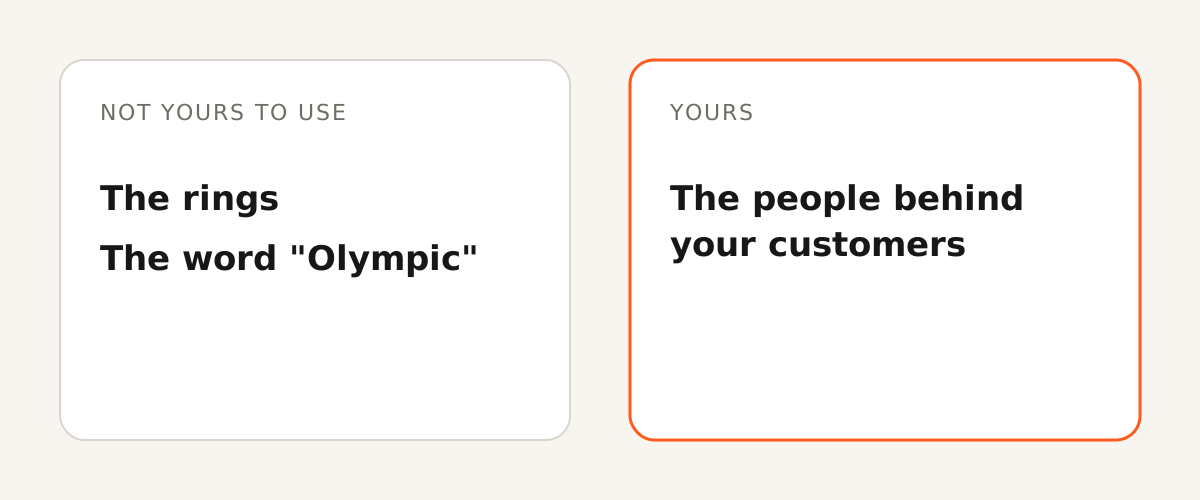
In Canada the Olympic words and symbols are protected by the Olympic and Paralympic Marks Act (Government of Canada, 2007), and the Canadian Olympic Committee acts against commercial misuse of the brand (Canadian Olympic Committee, 2026). A shop window with the rings and an “Olympic special” can put a business on the wrong side of those rules.
Cheer for the athletes in your own words and leave the marks to the sponsors.